
Key Takeaways
- Toolboxes cost more because they use thick steel, precision hardware, durable coatings, and heavy-duty construction built to last for decades.
- High-quality ball-bearing slides, reinforced drawers, and industrial welding dramatically increase manufacturing costs.
- You’re paying for strength, durability, smooth operation, security, and long-term reliability, not just “a metal box.”
- Shipping, brand reputation, and low production volume also drive prices up.
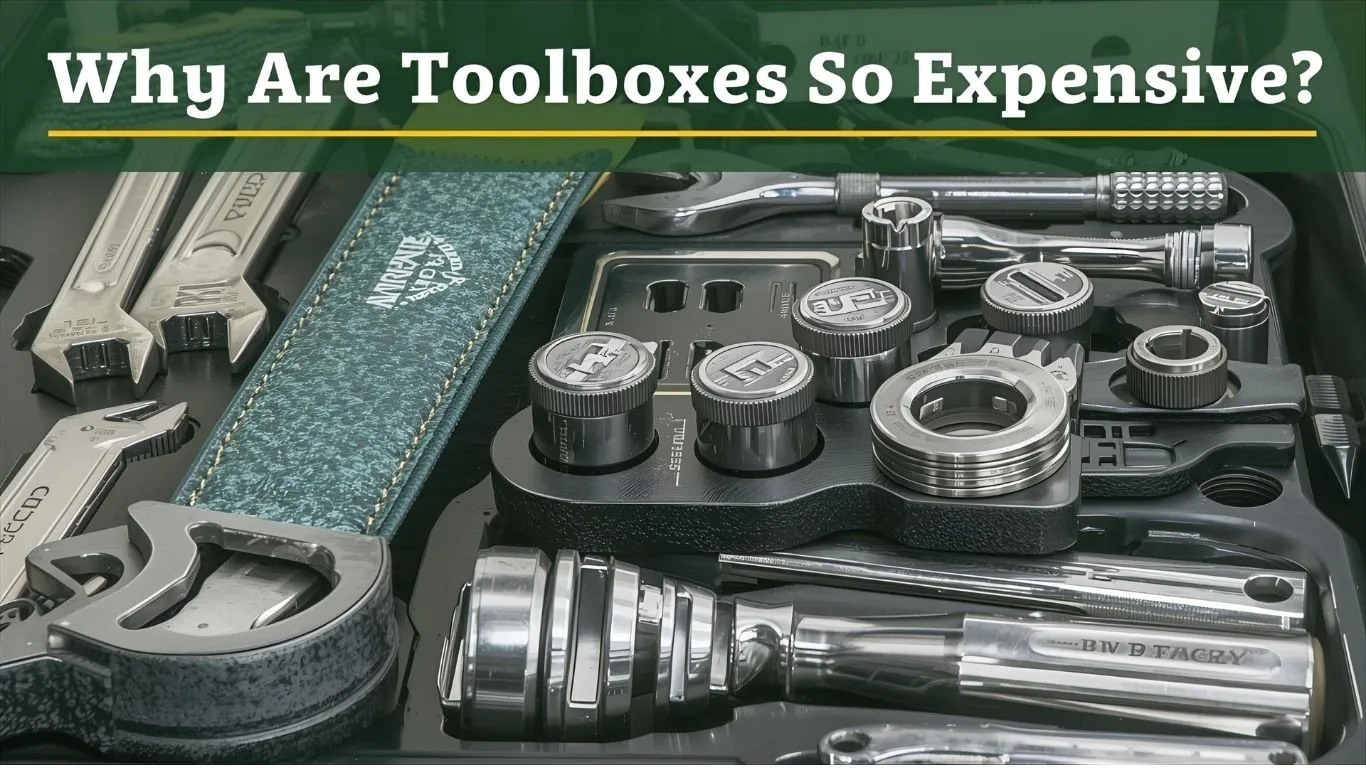
Toolboxes are expensive because they’re built from heavy-duty materials like thick-gauge steel and industrial plastics, use precision-engineered drawer slides, and require reinforced construction to handle hundreds of pounds of tools. Add in powder coating, security locks, brand reputation, and costly freight shipping, and the price reflects their durability and long lifespan.
Introduction
If you’ve ever walked into Home Depot, Harbor Freight, or a Snap-On truck and nearly choked on your coffee after seeing the price of a toolbox… welcome to the club.
I still remember staring at a $1,500 roll-around cabinet thinking, “That’s more than my first car.”
But like most things in the hardware world, once you understand what goes into them, the price starts to make sense—kinda like realizing why a Festool sander costs more than a TV.
Toolboxes aren’t expensive because manufacturers want to punish us.
They’re expensive because they’re heavy-duty, precise, and built to survive years of abuse in garages, workshops, and job sites.
Let’s break down exactly where all that cost comes from.
Heavy-Duty Materials Don’t Come Cheap
It all starts with the materials. A real toolbox isn’t flimsy sheet metal—it’s built from stuff that can take a beating.
Common toolbox materials:
- Thick-gauge steel (16–20 gauge)
- Aluminum alloy
- Industrial plastics (HDPE, ABS)
- Hardened corner reinforcements
Steel prices alone have risen substantially over the years. The thicker the steel → the stronger the toolbox → the more it costs.
Why it matters:
Cheap metal bends when you slam drawers or drop a socket wrench. Good steel doesn’t.
Ball-Bearing Drawer Slides Drive the Price Up
This is where the real cost hides.
High-quality toolboxes use ball-bearing slides, sometimes 8–10 bearings per slide, engineered to handle:
- Heavy loads
- Smooth movement
- 10,000+ open/close cycles
A single good slide mechanism can cost $10–$25 wholesale. Multiply that by:
- Number of drawers
- Weight capacity
- Soft-close or dual-rail systems
…and suddenly the price tag starts to make sense.
If you want drawers that glide like butter even when loaded with 120 lbs of sockets—this is where you pay for it.
Precision Welding & Reinforced Frames
Toolboxes aren’t “a metal box.”
They’re engineered structures with:
- Welded corners
- Reinforced frames
- Perfectly squared drawers
- Parallel alignment rails
- Anti-wobble caster plates
The manufacturing takes time, skill, and precise machinery.
A poorly welded toolbox twists, binds, and breaks.
A well-built one feels like a tank.
Powder Coating & Rust Protection Add Cost
Before any toolbox hits the shelves, it goes through:
- Sandblasting
- Primer
- Powder coating
- Heat curing
Powder coating alone can cost more than $50–$80 per unit in material and labor.
But it keeps toolboxes rust-free for decades—even in a humid garage or busy workshop.
Toolboxes Are Designed for Daily Abuse
A toolbox needs to survive things like:
- Oil spills
- Dropped hammers
- 100+ lbs of sockets
- Greasy hands
- Concrete floors
They’re not decorative furniture—they’re industrial gear.
Manufacturers design them with overkill strength because if a pro’s toolbox fails at work, tools spill everywhere, drawers jam, and productivity dies.
Security Features Aren’t Cheap
Good toolboxes use:
- Reinforced lock bars
- Tubular locks
- Anti-pry drawer designs
- Double-latch systems
Some even include integrated power strips and internal locking rails.
You’re paying for peace of mind—not just storage.
Shipping Heavy Metal Is Expensive
Toolboxes weigh anywhere from 50 lbs to 450+ lbs.
Shipping something that heavy requires:
- Pallet freight
- Special packaging
- Liftgate delivery
- Warehouse handling
All of this gets rolled into the final retail price.
A big toolbox may cost $80–$200 just to ship before it ever hits a store.
Brand Reputation & Warranty Add Value
Let’s be honest—part of the price is the name.
Snap-On, Matco, Mac Tools = premium pricing
Why?
Their products last years, come with strong warranties, and are trusted by professionals.
Milwaukee, Dewalt, Husky, and Craftsman fall mid-range.
Harbor Freight (US General) is budget but surprisingly solid.
You’re not just buying metal—you’re buying reliability.
They’re Not Mass-Produced Like Consumer Appliances
Toolboxes have:
- Lower sales volume
- Higher material usage
- Smaller production runs
- More manual labor
When something isn’t mass-produced, economies of scale don’t kick in.
So yes, the price is higher.
In Short: Toolboxes Are Expensive Because They’re Built Like Tanks
A toolbox:
- Isn’t flimsy
- Isn’t simple
- Isn’t fast to build
It’s a heavy-duty storage system engineered to organize thousands of dollars’ worth of tools reliably for decades.
And that’s worth more than just “a metal box with drawers.”
Frequently Asked Questions
If you use them daily—yes. They last longer, glide better, and protect your tools.
Hand-built construction, flawless slides, lifetime durability, and professional-grade engineering.
Harbor Freight’s US General line is widely considered the best bang for the buck.
Good ones do. Cheap ones crack. They’re great for light-duty work.
No—but they can dent more easily than steel.
Summary
Toolboxes are expensive because they’re built to survive years of hard use. Heavy-gauge steel, ball-bearing slides, industrial welding, powder coating, locking systems, and freight shipping all contribute to the cost. But with that price comes durability, reliability, and long-term value — exactly what a serious DIYer or tradesperson needs.