
Key Takeaways
- A little bar oil under your chainsaw is completely normal, especially after cutting or when stored warm.
- Chainsaws don’t use sealed systems—bar oil naturally seeps due to gravity, heat expansion, and open oiling channels.
- Continuous leaking, a drained oil tank, or large puddles may mean worn seals, loose caps, or internal oil passage issues that should be checked by a professional.
- Most “oil leaks” come from residual oil on the bar and chain, not an actual system failure.
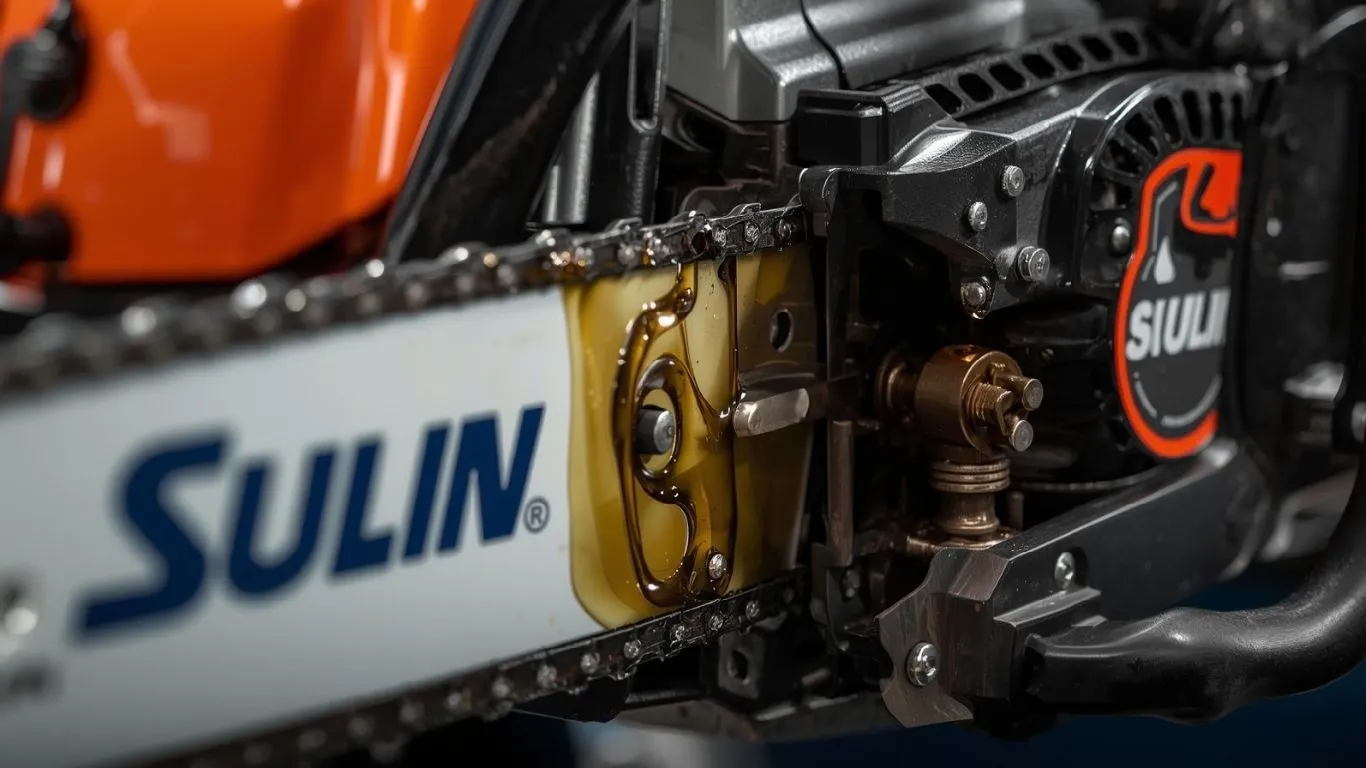
Most chainsaws leak bar oil because their oiling system is gravity-fed and not fully sealed, which means oil naturally seeps through the bar pad and oil passages while the saw is stored. Heat expansion, overfilling, leftover oil on the bar and chain, or a loose oil cap can all cause small leaks. Large or constant puddles, however, may indicate worn components and should be inspected by a professional.
Introduction: Why Does My Chainsaw Leak Bar Oil? (The Honest Truth)
If you’ve ever parked your chainsaw in the garage, cleaned up for the day, and later came back to a mysterious little oil puddle under the saw… congratulations, you’ve joined the club.
The first time it happened to me, I thought something was broken. I wiped the floor, checked the tank, stared at it like some kind of two-stroke detective, and still couldn’t figure out how it leaked that fast.
But here’s what most people don’t know:
A chainsaw dripping a little bar oil while sitting is almost always normal.
Not ideal.
Not pretty.
But normal.
Chainsaws—whether gas, battery, or corded—just aren’t designed with sealed oil systems. And once you understand how bar oil moves inside the saw, the leak suddenly makes a whole lot more sense.
Let’s break it down with real explanations, real examples, and zero fluff.
Read Also: How to Clean a Chainsaw Carburetor
Why Chainsaws Commonly Leak Bar Oil
Bar Oil Naturally Seeps Out When the Saw Isn’t Being Used
Here’s the part that surprises most people:
Chainsaws don’t have valves or pumps that stop oil flow when the saw is off.
Instead, bar oil sits above the bar pad and moves through simple pathways.
So when the saw is stored:
- Gravity pulls oil downward
- Pressure equalizes
- Oil slowly migrates to the bar pad
- It drips out over time
Normal oil leak pattern:
- Quarter-sized spot
- A thin streak under the bar
- A few drops after cutting
Not normal:
- Oil tank empties overnight
- Large puddles
- Oil pouring from the housing
If you fall into the “not normal” category, keep reading—there are a few common reasons why.
Read Also: How To Port a Chainsaw
Heat Makes the Oil Expand and Push Out
Bar oil thickens when cold and thins when warm. When your saw sits in a warm garage, shed, or truck bed, the oil expands.
The oil then takes the path of least resistance:
- The oil port
- The bar pad
- Around the oil cap
- Through the vent
Signs heat is the culprit:
- The leak happens only during hot weather
- The puddle slows down in cooler months
This one caught me off guard the first summer I left my saw in the truck. Came back to what looked like the Exxon Valdez under my tool bag.
Read Also: The Best Chainsaw Helmets
Residual Oil From Cutting Drips Off Naturally
Even if your oil tank is closed, the bar and chain remain oily after cutting. When the saw sits:
- Oil runs off the chain
- Drops from the bar tip
- Collects around the clutch cover
- Slowly drips onto the surface below
So a puddle after a cutting session doesn’t necessarily mean anything is wrong.
Pro tip:
If it only leaks after a day of cutting, it’s likely just leftover oil.
The Oil Cap or Gasket Isn’t Fully Sealed
This is one of the simplest causes—and one of the easiest to overlook.
An oil cap that’s slightly crooked or whose rubber gasket isn’t seated can cause steady dripping.
Common signs:
- Oil around the cap area
- Streaks running down the oil tank
- The cap feels “off” when tightened
This doesn’t mean something major is broken—caps can misalign easily, especially on older saws.
Read Also: Best Chainsaws for Cutting Trees
Some Chainsaws Have a Vent That Releases a Little Oil
Most chainsaws have a vented oil reservoir to prevent pressure buildup. On certain designs, the vent might allow tiny amounts of oil to seep out.
Again—annoying, but normal.
If your saw is brand new and leaks a few drops from the vent, it’s usually by design.
Overfilling the Bar Oil Tank Causes Overflow
If you top off the tank right to the brim, the oil has nowhere to expand.
When the saw warms up?
It finds a way out.
What overfill leaks usually look like:
- A sudden puddle shortly after filling
- Oil on the exterior of the tank
- Faster-than-normal dripping
Leave a little room at the top. Your garage floor will thank you.
Read Also: How To Start An Echo chainsaw
Worn Oil Pathways or Housing (More Serious Issue)
Chainsaws take a beating—heat, vibration, chips, dirt—and over time, wear can occur inside the oiling system.
This includes:
- Worn oil passage openings
- Cracks in the housing
- Loose fittings
- Internal wear near the bar mount
These worn areas can cause continuous leakage.
Definite signs to get it checked:
- The oil tank drains while the saw sits
- Oil leaks even when stored for days
- Oil appears in unusual spots like behind the clutch
A technician can diagnose these without you having to take the saw apart.
Read Also: Chainsaw Chain For Hardwood
Is a Chainsaw Bar Oil Leak Dangerous?
A small leak?
Nope—not dangerous. Just messy.
A major leak?
That can be dangerous because:
- You could run low on oil during cutting
- The bar and chain could overheat
- You risk premature chain or bar wear
If your saw is leaving puddles big enough to slip on, it’s time for a pro look.
Read Also: What are the Best Chainsaws Under $300, $200 and $100?
How to Reduce Bar Oil Mess (Without Repairs)
A few simple habits (no tools required):
Store the saw on cardboard or a drip tray
You’ll never worry about oil stains again.
Empty the bar oil before long-term storage
(Only for long-term! Not needed after each use.)
Clean the bar groove and oil port after cutting
Less leftover oil = less dripping.
These simple habits reduce the mess—without opening up anything or risking damage.
Frequently Asked Questions
Yes. Almost all chainsaws leak a small amount when stored.
Because bar oiling systems are the same—gravity-fed pathways.
Yes, unless it leaks excessively. A drip tray helps.
Thicker oil may reduce drips in summer but won’t stop normal seepage.
Yes, as long as the oil tank isn’t draining rapidly.
Summary
Most chainsaw bar oil leaks aren’t problems at all—they’re part of how chainsaws are designed. A slow drip or a small puddle is normal, especially after use or in warm environments. But heavy leaking, rapid oil loss, or oil appearing in unusual areas may be signs of worn components that should be checked by a professional.